

Minnetonka homeowners are leading the trend in luxury outdoor living this year. As the 2026 summer season approaches, residents from the Oak Knoll neighborhood to the shores of Lake Minnetonka are expanding their cooking spaces. A key component of these upgrades involves professional gas line hookups for your Minnetonka outdoor kitchen. Installing a dedicated natural gas line removes the need for heavy propane tanks. It provides a constant fuel source for high-end grills, pizza ovens, and fire pits. Working with natural gas requires precision and adherence to strict safety standards. You must ensure that every connection meets current building codes to protect your property and family.
Gas plumbing involves more than just connecting a pipe. It requires careful load calculations to ensure your appliances receive the correct pressure. In the Minneapolis metro area, homeowners often find that adding multiple outdoor features can strain an existing system. A professional plumber will evaluate your current gas meter capacity. If your meter cannot handle the increased British Thermal Units or BTUs, we coordinate with CenterPoint Energy to discuss potential meter upgrades. This step prevents your indoor furnace or water heater from losing fuel when you ignite the patio grill.
Understanding Minnetonka Gas Line Regulations
The City of Minnetonka has specific requirements for all gas piping installations. These rules ensure that lines are buried at the correct depth and made of approved materials. Current 2026 standards require that outdoor gas lines be buried at least 18 inches deep. If the line runs under a driveway or a heavy stone patio, different protection measures apply. Professionals must pull a permit through the Minnetonka Building Inspections department before work begins. This process includes a rough-in inspection and a final pressure test. Skipping these steps can lead to safety hazards and issues with home insurance claims.
During the inspection, we apply a pressure gauge to the line. The system must hold a specific amount of air pressure for a set time without any drop. This confirms that there are zero leaks in the joints or the pipe itself. We use specialized testing equipment to verify the integrity of the system. If you ever smell a sulfur-like odor, you should immediately contact 24/7 emergency plumbing services. Professional gas line hookups for your Minnetonka outdoor kitchen include the installation of accessible shut-off valves for every appliance. This allows you to cut the gas to the grill without turning off the heat for your entire home.
BTU Requirements for Common Outdoor Appliances
Calculating the total gas load is the first step in any installation. Each appliance has a specific BTU rating. If the pipe diameter is too small, the flame on your grill will be weak. You might also notice that your fire pit flickers or struggles to stay lit. The table below shows typical BTU loads for popular outdoor features in 2026.
| Appliance Type | Average BTU Rating | Required Pipe Diameter (Approximate) |
|---|---|---|
| Standard 36 Inch Built-In Grill | 45,000 to 75,000 | 3/4 Inch |
| Outdoor Pizza Oven | 30,000 to 50,000 | 1/2 Inch |
| Large Fire Pit Burner | 60,000 to 150,000 | 1 Inch |
| Patio Side Burner | 15,000 to 30,000 | 1/2 Inch |
| Outdoor Fireplace | 50,000 to 80,000 | 3/4 Inch |
These figures can change based on the length of the run. A line that travels 100 feet from the meter to the back of the property will lose pressure compared to a 10-foot run. We use detailed sizing charts to determine the exact pipe thickness needed for your specific layout. This ensures that every appliance performs at its maximum capacity even when everything is running at once. For those building a high-end setup, our commercial kitchen plumbing expertise helps in designing efficient fuel delivery systems.

Choosing the Right Materials for Outdoor Gas Piping
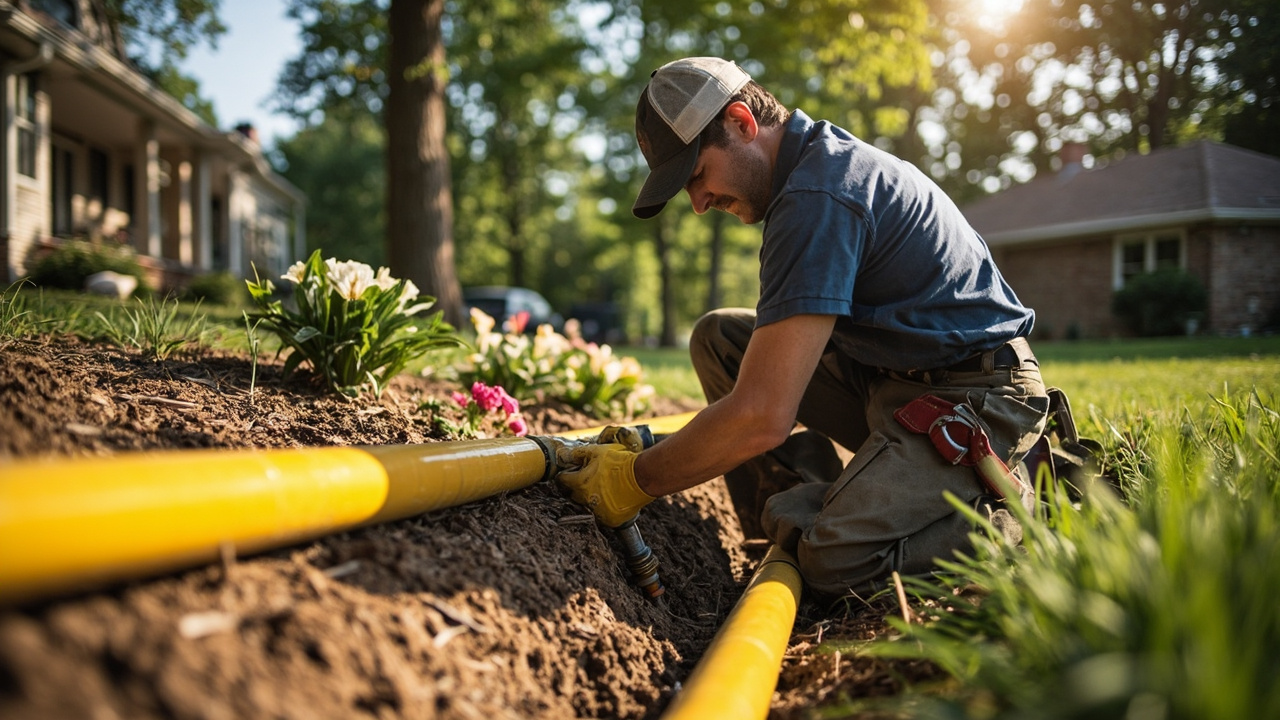
Not all pipes are suitable for the Minnesota climate. Our soil goes through intense freeze-thaw cycles every year. In Minnetonka, the clay-heavy soil can shift, which puts stress on buried lines. We choose materials that resist corrosion and handle these shifts without cracking. For underground installations, we primarily use high-density polyethylene or HDPE pipe. This flexible plastic is designed specifically for gas. It does not rust and handles ground movement well. We also install a tracer wire along the plastic pipe. This allows future utility locators to find the line using electronic equipment.
For portions of the line that are above ground or inside the house, we use different materials. Black iron pipe is the standard for interior runs. It is strong and heat-resistant. In some cases, we use Corrugated Stainless Steel Tubing or CSST. This flexible tubing is faster to install around tight corners. However, it must be properly bonded and grounded to protect against lightning strikes. The table below compares the most common materials used for professional gas line hookups for your Minnetonka outdoor kitchen.
| Material Type | Location Suitability | Main Benefit |
|---|---|---|
| Black Steel Pipe | Indoor or Exposed Outdoor | Extremely durable and rigid |
| HDPE (Yellow Plastic) | Underground only | Corrosion proof and flexible |
| CSST (Flexible Tubing) | Indoor or Protected Chase | Fewer joints and easier routing |
| Epoxy Coated Steel | Exterior exposed | Resists rust from snow and rain |
If you are planning a complete renovation, you might also consider whole home repiping if your existing gas lines are aging. Many older homes in the Wayzata High School area still have original steel pipes that may show signs of exterior rust. Replacing these lines now prevents future leaks and ensures your new outdoor kitchen has a reliable foundation.
Steps for a Professional Outdoor Gas Line Installation
Our process starts with a site visit to your Minnetonka property. We map out the best route for the new line to minimize damage to your landscaping. We try to avoid digging through established gardens or under mature trees when possible. The installation generally follows these steps.
- Marking existing utility lines to avoid hitting water or electric cables.
- Trenching to the required 18-inch depth using specialized equipment.
- Connecting to the main gas supply after the meter.
- Laying the HDPE pipe with a tracer wire and sand bedding for protection.
- Installing the riser where the pipe exits the ground at the kitchen island.
- Adding a dedicated shut-off valve and a sediment trap at the appliance connection.
- Performing the mandatory air pressure test for the city inspector.
- Backfilling the trench and restoring the surface of your yard.
Safety is the priority throughout this entire project. We ensure that every connection is coated with a leak-detection solution during the final startup. If we find any issues with your existing system, we offer gas line repair and installation to bring everything up to current code. This often involves adding drip legs or sediment traps which are required by modern standards but were missing in older installations.
Connecting Outdoor Pizza Ovens and Specialty Appliances
Modern outdoor kitchens in 2026 often include more than just a standard grill. We see a rise in wood-fired ovens with gas starters and high-output power burners for boiling large pots of corn. These specialty appliances have unique requirements. For instance, a power burner needs a high volume of gas in a short period. This might require a larger dedicated branch line. We also work with homeowners who want to add gas lanterns or fire features near their pool decks. These decorative elements require small but precise gas flows.
When we connect these items, we ensure the flex connectors are rated for outdoor use. These connectors must be stainless steel and coated to resist the elements. We never use indoor dryer or range connectors for an outdoor grill. The salt used on Minneapolis roads can sometimes drift or be carried on shoes, leading to faster corrosion of improper materials. Using the correct components ensures your system lasts for decades. If you have questions about the cost of these specialized connections, check our plumbing repair cost guide 2026 for current market pricing in Hennepin County.

The Importance of Proper Trenching and Yard Protection
Digging a trench across a manicured Minnetonka lawn can be stressful for homeowners. We use techniques to minimize the impact on your grass. We carefully remove the top layer of sod and set it aside on tarps. This allows us to replace the grass once the pipe is in the ground. Within a few weeks, the trench line usually disappears completely. We also pay close attention to drainage. We ensure the soil is compacted correctly so you do not end up with a sunken path in your yard after the first heavy rain.
In some cases, we can use trenchless technology to pull pipes under sidewalks or small patios. This avoids the need to break up concrete or pavers. This is particularly useful for homes near the Minnetonka Boulevard corridor where properties often have extensive hardscaping. If we do need to cut through a patio, we coordinate with your landscaper to ensure the repair is seamless. Protecting your property while providing professional gas line hookups for your Minnetonka outdoor kitchen is a hallmark of our service.
Gas Safety and Leak Detection for Outdoor Spaces
Even though gas lines are outdoors, safety remains a major concern. A leak in a buried line can migrate through the soil and enter your basement or crawlspace. This is why proper installation and testing are mandatory. We also educate homeowners on how to identify a gas leak. If you notice dead patches of grass along the path of the gas line, it could indicate a leak is displacing oxygen in the soil. You might also hear a hissing sound near the grill or the meter. For any concerns, our gas leak detection and repair team uses electronic sniffers to find the exact source of the problem.
Modern gas systems in 2026 often include automatic shut-off sensors. These devices can detect unusual gas flow and close the valve automatically. This is an excellent safety feature for families with children or those who travel frequently. We can integrate these safety valves into your outdoor kitchen design. This adds an extra layer of protection beyond the standard manual valves. If you have concerns about other water or gas issues, you might want to learn how to shut off the main water valve as part of your general home safety knowledge.
Why Licensed Plumbers are Required for Gas Work
In Minnesota, gas piping is a regulated trade. Only licensed plumbers or gas fitters should handle these installations. This is not a DIY project. The risks of improper installation include fires, explosions, and carbon monoxide poisoning. A licensed professional carries the necessary insurance to protect your home. We also stay updated on the latest changes to the Minnesota Fuel Gas Code. This ensures that your installation will pass inspection and remain safe for years to come.
Working with a professional also means you get a system that is designed for efficiency. We ensure the pipes are sloped correctly to prevent moisture buildup. In our cold climate, small amounts of water vapor can freeze inside a gas line if it is not installed properly. This can block the flow of gas and leave you without a grill in the middle of a winter barbecue. We also ensure that all exterior pipes are painted or coated to prevent rust. If you need help with other luxury upgrades, we also offer tankless water heater services which can provide endless hot water to your outdoor sink.
As you prepare your home for the upcoming season, don’t forget to check your other plumbing systems. We recommend a full plumbing inspection checklist to ensure your indoor and outdoor pipes are ready. For those looking to save on utility costs while running multiple outdoor appliances, our water conservation tips can help balance your overall home resource use. If you are ready to start your project, contact a local expert who understands the unique needs of Minnetonka residents. We provide reliable and safe gas solutions that help you get the most out of your backyard retreat.